Experience is the teacher of all things.
When designing e‑learning courses, one question always comes up: What makes a course truly effective and valuable? Is it the quality of the content? The activities? The graphic design?
All of these elements matter—but after decades of experience,we’ve learned one truth that stands above the rest: experience is the teacher of all things. People learn by doing, and scenario‑based training gives learners exactly that—practice, decision‑making, and meaningful application.
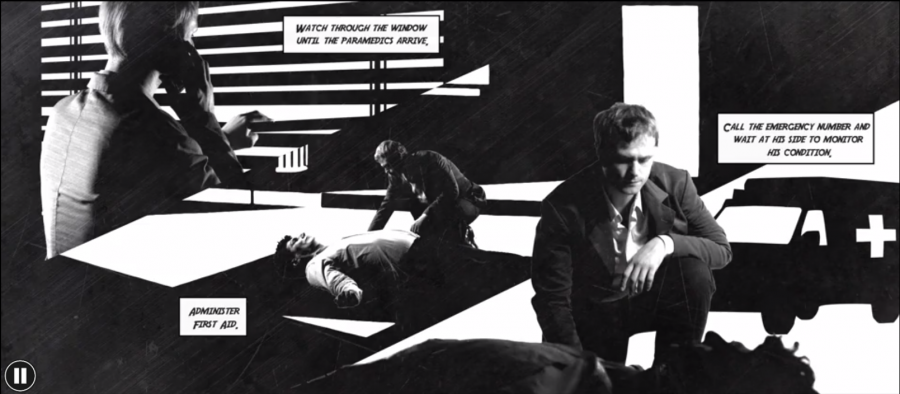
At an oil and gas company, employees could easily define first aid concepts and pass knowledge checks. Yet when a real accident occurred, they froze. They weren’t sure how to act or how to apply the theory they had memorized. The company needed a solution that would help employees navigate real‑life situations and make life‑or‑death decisions—while still providing a safe space to practice.
So how do you bring real experience into an e‑learning course while keeping learners engaged?
In this project, we built a branching scenario where learners had to make decisions at every step, shaping the outcome of the story. Should they call an ambulance immediately or administer first aid first? Should they move the injured person or keep them still? Each choice led to a different path—and a different consequence.
Branching scenarios allow learners to explore multiple situations and outcomes. They create a safe environment where learners can make choices, reflect on them, and understand the real‑worldi mpact of their actions. There’s no judgment—just guided discovery. Ultimately, an effective course should encourage learners to think and act as they would in real life.
Why scenarios? Here are some of their biggest benefits:
Branching scenarios require constant thinking and decision‑making. Learners become active participants rather than passive observers, staying engaged while gaining practical experience.
Mistakes don’t stop learning—they strengthen it. Scenarios let learners fail without real‑world consequences, turning errors into long‑lasting lessons. It’s real‑world pressure, minus the real‑world risk.
We don’t just want learners to remember information—we want them to use it. By simulating real‑life challenges, scenarios help learners apply knowledge, improving both retention and on‑the‑job performance.

Scenario‑based training takes time to design, but the impact is undeniable. We’ve seen firsthand how this approach transforms learning outcomes and builds confidence in high‑stakes environments.
Have you used branching scenarios in your solutions? Taken a course that used them? Can you think of a challenge that could be solved through scenario‑based learning?
Key Takeaways